Dunstan Baby Language
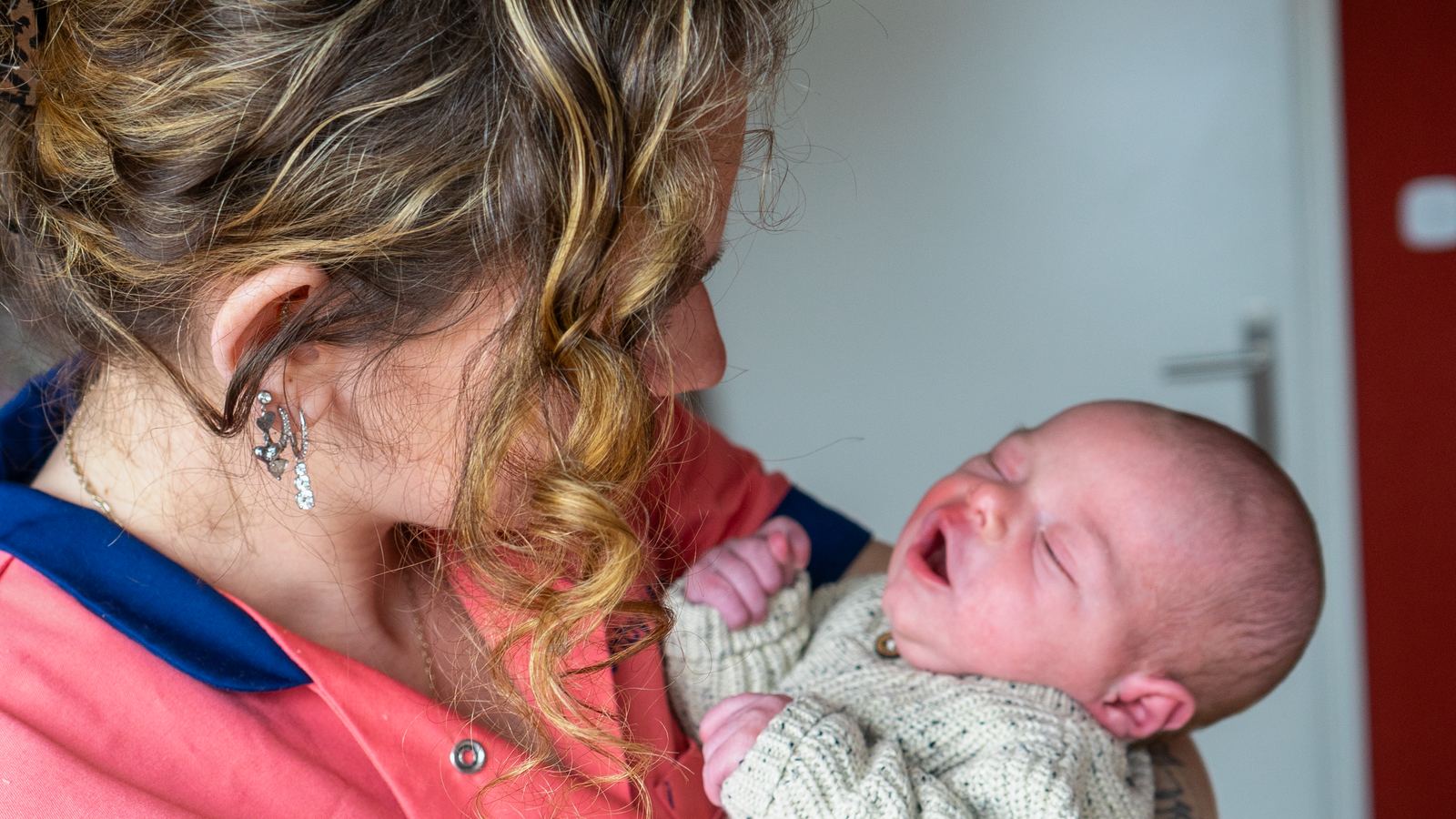
Every new parent will recognise it. You feel helpless when your baby cries and you have no idea what he or she is trying to tell you. Of course you understand your baby a little better every day, and you recognise the little sounds and body language more and more. But did you know that every baby makes 5 reflex sounds? How wonderful would it be to learn to tell them apart, so you can respond to them and the crying stops.
The discovery of Dunstan Baby Language
After the birth of her son, Priscilla Dunstan discovered, thanks to her perfect pitch, her feel for sound and her instinct as a mother, that he was not just making random sounds. By keeping track of the sounds in a diary, she was able to recognise clear patterns. This allowed her to respond to her son's needs. After this discovery she tested her theory on more than a thousand babies of 30 nationalities. Nine years and three independent studies later, Dunstan Baby Language was born. It makes the maternity nurse's work much more enjoyable and easier, and life much more pleasant for you as new parents and for your baby. For convenience we refer to the baby as “he” in this text, but of course we mean “he” or “she”.
Will you become baby experts too?
At Baby’s & Zo Kraamzorg we are so convinced of Dunstan Baby Language that all our maternity nurses are trained and certified to teach it to you. We are therefore a maternity care agency recognised by Dunstan Baby Language. Our experts make sure that you, too, become baby experts during the maternity week. You will often hear people say when your baby cries: ”He must be hungry”, but you will be able to tell them straight away why your baby is crying. All too often the wrong action is linked to a baby's crying, resulting in unnecessary crying, because if your baby has colic but the parents think it is hunger, extra feeding will not help at all.
The maternity nurse will let you hear and see what the 5 sounds are, and you will put this into practice straight away with your own baby.
The five sounds
Neh: When your baby is hungry, he will start sucking on his fingers and hands. If he adds a sound to this, you will hear the word for hunger, Neh. The tongue moves from the top to the bottom of the mouth, which creates the N sound. Neh is a drawn-out sound
Eh: When a burp is stuck, the baby may start squirming a little. He makes an Eh sound while doing so. It sounds a lot like Neh and Heh, so listen carefully to the initial sound, but Eh is a short sound.
Heh: Your baby makes this sound when he feels uncomfortable. You hear a breathy H sound, similar to panting. Discomfort can have several causes, so you will need to investigate. He may have a full nappy, which is very easy to rule out. Your baby may also be too warm or too cold. The maternity nurse can teach you to check this by feeling the back of the baby's neck. An uncomfortable position can also be the cause.
Eairh: The hardest sound to distinguish is Eairh. This sound indicates that your baby has intestinal cramps. It is an urgent, piercing sound. Fortunately the body language is easier to read here, because the baby will also arch his back and go red in the face. The fists are clenched and the baby pulls a pained face. Your baby will also relax in between, until the next cramp comes.
Owh: With this sound the mouth forms an O or oval shape . That is because it comes from the yawn reflex. It is a whiny sound, a bit like grumbling. What your baby is really telling you is that he is very tired and would like to go to sleep in his cot.
Benefits of Dunstan Baby Language
- Your baby does not need to cry excessively if you know straight away what is going on.
- It reduces stress for you and your baby
- Once you are baby experts yourselves, you no longer need to listen to unsolicited advice from everyone around you. You are the parents and always know best, don't forget that.
- It gives a lot of confidence and calm and contributes to a strong bond with your baby
Want to know more?
Ask your intake consultant and maternity nurse about Dunstan Baby Language or visit www.babytaal.nl